Showing posts with label customerlobby.com/reviews/159/the-clarke-team/. Show all posts

Friday, November 27, 2015

Risks of Buying REO Property

by Anna Assad, Demand Media
REO properties may contain garbage and some of the former owner's belongings.
Buying a real estate owned home is often tempting because of the savings potential. Lenders with REO properties usually want to sell as soon as possible to avoid the cost and hassle of ownership, and that is reflected in their pricing. While buying a REO property comes with the risks you'd have under a traditional sale, there are some extra warnings involved.

Poor Condition

An REO home is often the result of a foreclosure that no one wanted at auction. It may have damage from vandals, the elements or the prior owners. Lenders sometimes have REO homes that have sat vacant for months or even years, increasing the chances of damage and problems such as pest infestation. While you may have the chance to get a home inspection before buying, the cost is usually your responsibility, and the lender normally won't make any corrections, selling the home "as is."

Rough Transaction

The process for buying REOs is different from traditional property buying and may take longer. Using an inexperienced real estate agent can make matters worse, since the agent must follow the selling lender's specific process for submitting offers and closing the deal. Transaction problems can cost you time and even money if the agent misses deadlines and you lose the home and any nonrefundable cash you spent.

Underpricing and Overpricing

Lenders may intentionally underprice a home to attract buyers quickly because it needs substantial repairs or has costly issues, such as illegal tenants, that the lender doesn't want to deal with. You may find yourself with a huge repair bill and other headaches for a cheap REO you bought. Overpricing may happen in cases where the lender based selling information on outdated property reports instead of the current state of the home and its neighborhood.

Squatters

Abandoned homes may attract squatters, people who have moved into the home illegally. While the lender, as the owner, has the right to evict squatters from REO properties, it may become your problem if the lender fails to do so and you become the new owner. You'll have to go through the area's court eviction process, which may take months to complete and cost you money in legal and filing fees. Meanwhile, the squatters may continue to damage the home until you can have them removed.

Tuesday, November 24, 2015

Solutions for Yard Drainage

by Valerie Liles, Demand Media
Catch basins drain water away from your home and yard.
Managing excess water in your yard before it becomes a problem will save you time, money and aggravation. Channeling water away from your home's foundation, patio, driveway, play area or other low-lying areas will prevent pooling, mosquito infestations and serious erosion. Drainage is obviously important in high rainfall areas, but it's also important in areas where you want to retain and direct as much ground water as possible to support gardens, trees and shrubbery.

Gravel-Filled Trench

A French drain, or gravel-filled trench, is used where runoff is light. It catches and deflects water from elevated areas such as hillsides, roofs, patios and around swimming pool and ponds. These trenches are usually one foot deep by one foot wide, depending on the volume of water that will potentially go through it. The trench is filled with gravel and can extend the length of the yard.

Catch Basin

If you find low spots in your yard that are accumulating water, you may need a catch basin. A hole is dug at the lowest point in your yard to accommodate a plastic or concrete box and a length of PVC pipe. These boxes are available in several sizes at most large garden centers. They are designed to receive water through a grate when they are placed into a sloping trench with PVC pipe extending from the box along the trench toward a storm drain or dry well. Alternatively, the water can be redirected to plant beds.

Dry-Well

A dry-well is ideal in areas where it is illegal to tie into the local drain or storm system. Dry-wells allow accumulated water to gradually soak or seep into the ground through a 2- to 4-foot wide hole that is at least 3 feet deep, depending on the volume of water it needs to hold. The sides of hole are covered with landscape fabric to direct the water to the base of the hole. Trenches can be dug in problem areas to accommodate PVC pipe and directed toward the dry-well.

Grading

Grading is another possible solution for problematic yard drainage and entails re-grading or re-shaping the land. The goal is to move soil from one area to another putting it at the proper height and slope to ensure adequate drainage. Rough grading removes or adds enough soil to bring the surface to the correct height and slope, while finish grading prepares the landscape for planting. In most areas, adequate surface drainage requires a minimum of 2 1/2 to 3 inches of slope per 10 feet of ground.

Considerations

Utility companies are always notifying customers in mid-spring to “Be Careful Where You Dig,” and for good reason. A ditch witch trencher or sharp shovel can cause a lot of damage to underground utility lines, at your expense. You also need to make sure excess water has a legal exit path to a sewer or storm drain. Some building codes permit these lines, while other do not. If your house isn't connected to a sewer or drain system, you can direct it towards a septic tank or drainage field, just not your neighbor's flower garden.

Friday, November 20, 2015

Design Ideas for a House Closet

Design Ideas for a House Closet

by Kaye Morris, Demand Media
An organized closet is a thing of beauty.
A chief complaint from most homeowners is the lack of closet space. No matter how much bigger closets get, it never seems to be enough space to properly organize your wardrobe. If you spend most mornings rummaging through your closet for work clothes, then dashing out the door your standard 5 minutes late, it’s time to redesign your closet for maximum efficiency.

Two Hanging Levels

Older homes, especially, often have closets equipped with one hanging rod that allows long garments, such as dresses, to hang all the way down without wrinkling, but not many people have a full closet of dresses. The first way to create more space in your closet is to determine how much space you need for full-length clothes hanging, then add an additional clothes rod mid-way down the wall in the rest of the hanging space. A common organization is to place shirts on the top rod and pants, skirts and shorts on the bottom rod.

Drawers and Shelves

If you have a lot of clothes that you fold and stack, use one section of the closet to install floor to top shelf drawers or shelves. Stacking is especially suited to sweaters and silk blouses that can become misshapen or imprinted by hangers. Shelves offer the advantage of being able to see all your stacked clothes, but drawers offer the advantage of protecting clothes from dust, especially during long periods of nonuse.

Purse Bins

Rather than let the space above the top shelf and the ceiling go to waste, set a couple of 1-foot-square bins on top. Bins are sold in 1-, 2- and 3-foot heights, so choose the one that takes the best advantage of the available space. Once the bins are in place, simply slide your purses in each cubby for easy viewing and retrieval. Place specialty purses that are not used as often in the highest bins.

Shoe Boxes

If you have designer shoes that need to remain in the boxes for protection, use shoe stacking shelves on the floor of the closet and on the top shelf to hold the boxes. Using shelves, rather than stacking the boxes one on top of the other, allows you to pull a single box out without upsetting the entire stack. For shoe-finding efficiency, tape a picture of the shoe on the front of the box.

Ceiling Hangers for Ball Caps

Everyone knows about over-the-door hangers for hats, or the stretch racks that can be mounted on walls or doors, but you can hang your hats and make use of normally unused space at the same time. Screw plant-holder hooks into the ceiling down the middle of the closet and hang your ball caps from the hooks. Unless your ceilings are very low or you are very tall, the hats should not brush against the top of your head.

Tuesday, November 17, 2015

Why You Shouldn't Hate Your Homeowners Association Dues

You may not love making that payment, but the benefits are bigger than you think. 


shutterstock_261752714
By Shannon Ireland

If you buy a house in a planned development, a subdivision or a gated community, you’ll likely have to join a homeowners association (HOA). Which means you’ll be faced with the prospect of paying annual dues, whether you like it or not. Condo owners often face these fees, too.

No one expects you to be happy about these payments, especially when they often come due right after the holidays. And it’s true that the dues can be spent for seemingly trivial events such as neighborhood parties, and that management fees for the associations can be steep.

The HOA can make and enforce rules such as what colors houses can be painted, what types and sizes of pets are approved, whether holiday decorations are allowed on properties — even what types of mailboxes are allowed. And it can enforce these rules with fines and threats of foreclosures.

These associations say their rules and methods are necessary to keep property values up and maintain or increase resale values of the homes in the community. You might question that. But the fact of the matter is that HOA dues also can benefit you greatly, in ways that you can see and in ways that you might never think about.

Visible benefits from your dues

In addition to enforcing some degree of uniformity in your housing or condo development, the best-known function of homeowners associations is taking care of the community’s common areas. That includes landscaping — mowing the grass, planting and pruning trees, and taking care of flowers, lakes and clubhouses.

HOAs also operate swimming pools, gyms, and other amenities open to residents. Most also schedule regular pest control in common areas, and some set up garbage and other services.
Seems like these are pretty useful benefits, right? And there’s more to come.

Not-so-visible benefits

You can understand easily how you benefit from landscaping and swimming pools and gyms and the rest. But one of the real advantages of paying HOA dues comes when the association uses them for insurance for the condo or housing development. Why does a housing or condo development need insurance? We’re glad you asked.

Property insurance

This protection covers residents for any physical damage that happens to the common areas — particularly those clubhouses and other amenities mentioned earlier. Much like standard homeowners insurance, this coverage will help when there is damage from fire, wind, hail, and other covered perils.
This is particularly important in condo developments, because it also protects the buildings that house the units from the perils mentioned above. It’s up to the condo owner, however, to protect the contents of the condo.

What if the housing or condo development didn’t have any or adequate property insurance? Then the HOA would level special assessments against all the home or condo owners. Depending on the nature of the damage, that could result in you paying far more than your dues to make the development whole again.

Liability insurance

This is one of the most important parts of an HOA insurance policy, because it protects residents of a development if someone gets injured on common property. An injury could result in HOA members being sued, and legal costs and any award in the case could run into the hundreds of thousands of dollars, possibly more.

Why is this your concern? Because, again, the HOA could levy special assessments to raise the money to pay for the case. And remember, you’d have no alternative but to pay the assessment — otherwise, your home could be in danger.

Directors and officers insurance

Again, if someone — say, another resident — sues the leaders of the HOA, you would face the wrath of the courts just as much as the directors and officers. And again, you could be subject to a special assessment.

Employee dishonesty insurance

This would replace your — and other residents’ — HOA dues in case an employee steals money from the association.

Give your dues their due, but …

The almost-bottom line: Your dues, especially the part of them that goes toward HOA insurance, protect you from the prospect of paying larger amounts. So the dues do perform a useful function.
But here’s the real bottom line: You shouldn’t have to pay any more than is necessary. That means you should take the initiative. Make sure the HOA is spending your money wisely. Is it soliciting bids for the landscaping business? Does it seek several quotes for the insurance coverage before committing to a provider?

In other words, don’t hate the fact that you have to pay HOA dues. But don’t let your association get away with wasting that money, either. Your dues perform an important function that could save you money in the long run.

Friday, November 13, 2015

Ideas for a Second Floor Home Addition by Dennis Hartman, Demand Media

A second story can house several bedrooms.
A home addition is one way of adding value to a home by increasing living space and adding new appliances and fixtures. Homeowners can finance home additions with a home equity loan or through savings, turning a profit when it comes time to sell. A second story is one of the more complex addition projects, but it can have a major effect on the value of the home.

Bedrooms

Homeowners with a growing family may have the most to gain by using a second story addition to add bedrooms to the home. A second story can usually contain several bedrooms and at least one full bathroom. This will also free up bedrooms on the first floor. An unused bedroom on the first floor can easily become a guest room, media room or family room. Second floor bedrooms are more private and offer more unobstructed views of the yard and neighborhood, as well as increased air flow for ventilation. To keep residents safe in the event of a fire, second story bedrooms should include escape windows and emergency ladders.

Storage

A second floor addition opens up new space for storage, which can be important for any homeowners, especially those who have been in a home long enough to fill it with possessions. Even if the second story is primarily reserved for bedrooms, linen closets, crawl spaces or a new attic can all increase the amount of available storage space. Likewise, a new attic can hold items that were previously stored in a room on the first floor or in the basement, freeing up those spaces for new uses.

Apartment

Adding a second story can be a way for a homeowner to get into the rental property business, or accommodate an older child who needs more space and independence. A second story apartment includes not only one or more bedrooms but also a bathroom, ample storage space and even a small kitchen. Second story apartments may also have an exterior entrance, such as a stairway on the outside of the house or a new interior stairway with its own entrance door at street level. Taking on a tenant in a second story apartment can help defer the cost of the addition and also boost the value of the home significantly.

Home Office

Second story additions can also provide space for a home office. Keeping an office separate from the rest of the house is important, especially for those who work at home while children or other family members are present and potentially distracting. An exterior entrance is a good idea for a second story office if the homeowner plans to host clients without leading them through the private residential section of the home. Relegating the office to the second story also makes it easier to determine what portion of the home qualifies as the office for tax purposes.

Tuesday, November 10, 2015

How to Find a Concrete Contractor by Robert C. Young, Demand Media

Finding and hiring the right contractor is a key part of a successful concrete project. You want a professional who is dependable, honest and, most of all, competent. Unfortunately, finding a contractor who meets those qualifications is not as easy as opening the phone book or performing a quick Internet search. It is easy for anyone to place an ad and call himself a contractor. And even among licensed contractors, con men and incompetents abound. By performing some legwork before you start looking for a contractor, you greatly increase your chances of success.

1

Calculate the amount and type of concrete needed to complete the job by contacting a concrete company and telling them the dimensions of the site to be poured and the end use of the concrete. Different uses require different concrete densities. For example, the concrete used in the piers of a large building is denser than the concrete used to pour a residential driveway.

2

Contact your municipal building department and ask a construction inspector for a list of concrete contractors. Construction inspectors inspect the concrete forms and site before any concrete is poured. They know the good and bad contractors and have no problem telling you who the goods ones are and the ones to avoid.

3

Visit construction sites in your area and ask other contractors for referrals. Ask friends and family members who have recently had concrete work done for referrals as well.

4

Call contractors from your list and meet with them to discuss your job. Ask for references and copies of licenses and insurance. Choose the contractor with whom you are most comfortable.

Friday, November 6, 2015

Tax Information for Renting With the Option to Buy

When you rent a house with an option to buy, commonly called a "lease purchase option" or a "rent-to-own" arrangement, you don't just get an option to buy. You also get the right to own the property some day and to claim the deductions on it. As long as you're renting it, though, your ability to claim tax deductions are limited.

Lease Payment Deductions

The Internal Revenue Service recognizes two major classes of deduction for your home. As long as you itemize your deductions on Schedule A, you can write off your mortgage interest and your property taxes. However, lease payments aren't deductible, even if you have an option to buy the property. You may, however, be able to claim a renter's credit if your state offers one.

Paying Property Taxes

Some lease options require you to pay the property taxes while you occupy the building. Even if you're doing this, you still can't write off the taxes you pay. The IRS requires you to own the property on which you pay taxes to write them off. Until you exercise your option, you aren't the owner.

When You Buy

The money you pay into your lease option comes into play when you become a homeowner. It gets added to your purchase basis, which you can then use to reduce your capital gains liability if you sell your property for a profit in the future. For example, if your purchase price is $150,000, but you also paid a $5,000 option fee and $250 per month for 24 months, your cost basis would be $161.000 -- the $150,000 purchase price plus the option fee plus the $6,000 in monthly accruals. This higher cost basis gets subtracted from your net selling price to determine your taxable profit at sale, if any.

Reclassification

Sometimes, the IRS steps in and reclassifies your rental with an option to buy as an installment sale. This would happen if the transaction is set up in a way that it really appears as if you bought the property, instead of having you rent the property and maybe buy it. In this instance, your payments would be treated as installment sale payments, and you could be able to deduct some or all of them. While this is relatively rare, terms like lease payments that are much higher than fair market value, clauses requiring you to repair or maintain the property above and beyond what a normal tenant would do, or a very low purchase price could all trigger a reclassification.

Friday, October 30, 2015

New-Home Sales at Highest Level Since 2008

Daily Real Estate News | Friday, September 25, 2015

Sales of newly built single-family homes increased nearly 6 percent in August, reaching a seasonally adjusted annual rate of 552,000 units, the Commerce Department reported Thursday. That is the best monthly figure in new-home sales since February 2008. However, the number does still remain far off from the 706,000 unit-pace that is considered the 30-year historic average in new-home sales.

"We continue to hear from our members that more serious home buyers are returning to the market," says Tom Woods, chairman of the National Association of Home Builders. "Builders are gradually adding inventory to meet future demand as they handle shortages of lots and labor."

The Northeast posted the highest gains of any other region in the U.S., with new-home sales surging 24.1 percent in August. The South also posted a 7.4 percent month-over-month increase and the West saw a 5.4 percent increase in new-home sales. The Midwest was the only region in the U.S. to see new-home sales drop in August, falling 9.1 percent.

Overall, the inventory of new homes for-sale reached 216,000 units in August, a 4.7-month supply at the current sales pace.

"Today's report indicates the release of pent-up housing demand as the overall economy strengthens, consumer confidence grows and mortgage interest rates remain low," says David Crowe, NAHB's chief economist. "The housing market should continue to move forward at a modest but more persistent pace throughout the rest of 2015."

Source: National Association of Home Builders and "New Home Sales Highest Since 2008," CNNMoney (Sept. 24, 2015)

Tuesday, October 27, 2015

Property Taxes Are on the Rise

Daily Real Estate News | Friday, September 25, 2015

Property tax collections have increased nearly $13 billion or by nearly 3 percent over the past year, according to a new analysis by the National Association of Home Builders.

Property tax collections – including commercial real property taxes and personal property taxes – totaled more than $503 billion over the last year. Property taxes are critical to communities' financials, making up 38.9 percent of state and local tax receipts.

"Gains for state and local non-property tax collections have outpaced increases in property tax receipts in recent years because such non-property taxes experienced the greatest declines during the recession," NAHB notes on its blog, Eye on Housing. "The impact pushed the property tax share of total receipts from the four major sources from a high of 44.9 percent in the third quarter of 2010 to just below 39 percent for the second quarter of 2015."

NAHB economists point out that the current share is close to the pre-housing boom (2001-2003) average of 38 percent.

Source: "Property Tax Collections Increase," National Association of Home Builders' Eye on Housing blog (Sept. 22, 2015)

Friday, October 23, 2015

Multigenerational Homes

Having three generations live together in a one-family home is not uncommon these days, but this type of living situation isn’t without challenges. Everyone has a different lifestyle and to keep the family peace, experts suggest planning for this living arrangement.

“Family dynamics can add a whole new set of variables to the equation,” says Craig Brimhall, vice president of Wealth Strategies at Ameriprise Financial (AMP). “In these types of circumstances, communication really is the key to relearning how to live with your relatives.”

Along with setting expectations, you’ll also need to figure out how everyone will physically fit into your existing home and who will pay for any needed renovations or moving costs.
Living in a multigenerational home requires compromise and understanding from all parties. “You’ve got to talk about your relationship if there are issues,” says Brimhall. “When someone’s going to live with you, the money is important, but what’s more important is if the relationship will survive or get worse. Money is just a piece of life.”

Before everyone moves in, experts have suggestions for what to consider to make this transition as seamless as possible.

Communication

“If you sit down and get everything out in the open, it goes a lot better than if you ignore issues and aren’t straightforward about the new living situation and how everyone will interact together,” says Danny Lipford, home improvement expert and host of "Today's Homeowner with Danny Lipford."

Discuss rules and expectations upfront and be as transparent as you can to avoid any misunderstandings. “These are ongoing conversations, but many times, these have to do about independence,” says John Diehl, senior vice president of Strategic Markets at Hartford Funds. Try to understand what everyone needs as much as possible, which may range from individual pantry spaces or an area to entertain friends.
Setting boundaries is important too.

“Part of it may be having frank conversations about rearing children or activities, making sure everyone is on the same page about an area to be discussed and what should be approached with caution,” says Diehl. “You’re taking people who haven’t lived together for many years and combining them back in [under one roof] — their routines and interests are different.”

Finances

Having more people under one roof adds to monthly household expenses and may require expensive renovations so everyone can fit into the home. Who pays for this can become a source of contention between family members.

“It’s a reasonable conversation to have within the family about Mom and Dad contributing to modifications to your home,” says Diehl. “[Mom and Dad] may have an existing home that they may not need any longer, but the question of how much should be used to modify that living space is legitimate because, unless that child wasn’t taking their parents in, they wouldn’t make these modifications.”

Also consider everyone’s long-term plans. Expensive renovations for a Millennial who plans to live with you temporarily may not make economic sense, experts say, but this may change the longer they live with you and if they have children.

An elderly parent, however, who plans to stay with you for anywhere from a few years to several decades may need special accommodations from the start. If you have to borrow money to make these renovations for a parent who’s unable to live independently, Brimhall suggests diverting funds that would have been used to pay for assisted living towards a loan instead. “It’s very reasonable to ask parents to pay for this if they have the extra income to pay for it,” he says.

Experts suggest having this discussion with all siblings to avoid any inheritance issues in the future, but if Mom and Dad have assets, then they are the ones who make the ultimate decision. “The parents will have a controlling say and should come to the table with an understanding that it’s a significant change for the child they’re living with,” says Diehl. Ignoring these financial issues will create other problems later on.

“To expect the same child to provide the caregiving and perhaps step away from their job to do that and have their parents be with them 24-7, to put them further into debt to upgrade their house is asking a lot,” says Diehl. “It has to be a family conversation to the extent it can be.”

Home Layout

Trendy open floor plans aren’t always best for a multigenerational home. “Coming back into a family home with an open floor plan, you’re forced to do everything together because of the space and design of the home,” says Lipford, “and it’s more successful if people have at least a place where they can retreat.”
Certain rooms are always shared though, such as kitchens and utility rooms, but setting up bedrooms to be more of a suite will help someone maintain their independence. Add an area where they can have meals in private if they choose, along with an entertainment space.

“For the sanity of everyone and the longevity of the situation, it’s always better to have that bit of separation,” says Lipford. “Certainly you have that shared space, but it’s having that option to have your own sitting area.”

Adding doors can help provide a private space within the home too, and a separate entrance helps your new housemates maintain their social life and privacy.

Lipford advises making modifications for safety if necessary, like adding grab bars, walk-in showers, tubs with seats, anti-skid surfaces, faucets with levers and lever doorknobs. Consider separate heating and cooling controls, as well as redesigning the kitchen so everyone can access countertops and microwaves.

Move or renovate?

Since bringing new people into your family home is disruptive enough, start with the cost to retrofit your home. “Then you can have a larger conversation about whether that’s the right thing to do or if you should search for another larger home in a different location that can accommodate your needs,” says Diehl.
If renovation costs are high and you’re short on time, a good option may be to rent a home with a layout that’s better suited for multigenerational use.

Tuesday, October 20, 2015

Energy Sector Fueled More Economies in 2014

Texas led the nation in having the fastest-growing economies in 2014. Half of the 16 metro areas where the economy grew at a 6 percent rate or more last year were located in the Lone Star state, the Commerce Department reported this week.
Fastest-Growing Economies in 2014
  1. Midland, Texas
  2. San Angelo, Texas
  3. Lake Charles, La.
  4. Greeley, Colo.
  5. Wheeling, W.Va.-Ohio
  6. Dallas-Fort Worth-Arlington, Texas
  7. Bismarck, N.D.
  8. Victoria, Texas
  9. San Jose-Sunnyvale-Santa Clara, Calif.
  10. Corpus Christi, Texas
  11. Charleston, W.Va. 
  12. Odessa, Texas
Overall, the Commerce Department reports that economies rose in 282 of the nation's 381 metro areas last year.

Midland, Texas, a city known for its energy-rich sector, led the nation with a 24.1 percent advance in gross domestic product. Other Texas places high on the list included San Angelo, Texas, with an 11.4 percent growth, and Dallas with an 8.5 percent increase. Lake Charles, La., was No. 3 with a 10.3 percent growth, and Greely, Colo., landed at No. 4 with a 9.9 percent uptick.
The best performing economies tended to have a booming energy sector, The Wall Street Journal reports. "Natural resources and mining, which includes oil and gas extraction, was a relatively small contributor to growth, on average, in U.S. metro areas," WSJ reports. "But for areas leading overall growth, it was among the biggest drivers."

In Greely, Colo., natural resources and mining account for more than a third of that area's total economic growth.

Recent drops in oil prices over the last year likely will cause the economies in many of these fastest-growing areas to slow, WSJ reports. In Odessa, Texas, for example, the economy increased 6.3 percent in 2014 but the town has seen its unemployment rate rise to 4.5 percent in July 2015, up from 3.8 percent one year earlier.

Source: "Texas Towns Led the Country in Economic Growth in 2014," The Wall Street Journal (Sept. 23, 2015)

Friday, October 16, 2015

'Secret' Money-Saving Home Insurance Option?

A new article at realtor.com® is warning home owners about an influx of storm-chasing contractors who may be indirectly pushing up home insurance prices in their area. These contractors may knock on home owners' doors and say they need a new roof or siding due to wind and hail damage – all cosmetic damage repairs that may not be necessary.

Home insurance companies often classify dents, dimples, and dings in roof vents, shingles, or aluminum siding as "cosmetic damage" to a property, says Billy Van Jura, an insurance broker in Poughkeepsie, N.Y.
"When several claims for this type of work are submitted in a single region, the price everyone pays (including those who haven’t filed a claim) can increase because the insurer sees the region as having greater risk of additional claims," the article at realtor.com® cautions. "There's nothing you can do about a widespread storm that damages several homes in your area and ultimately raises everyone's rates. But you can help curb your own annual home insurance costs with a little-known option called 'cosmetic damage exclusion.'"

The American Association of Insurance Services created the cosmetic damage exclusion in 2013 – available in nearly all states – that aims at protecting consumers from scammers and tries keep home insurance rates more affordable. It makes cosmetic damage coverage optional. Home owners can then decide if they want to pay for cosmetic-only wind and hail damage. If the damage impacts the safety or structural functionality of the home, the home insurance policy will kick in.

By adding this exclusion to cosmetic damage, home owners stand to save money on their annual premiums – anywhere from $100 to $200 or more, says Troy Thompson, an independent insurance broker with Pinnacle Insurance Agency in Coon Rapids, Minn.

Hail and wind damage claims alone contribute to about 40 percent of all home insurance claims in the last five years, according to the Insurance Information Institute. And many of those claims may be for minor cosmetic repairs, such as a few nicks in the siding that home owners may be made to believe are more urgent than they actually are.

Home owners may choose to submit a claim for cosmetic damage covered by their home insurance policy, but they need to be aware that they may then be responsible for paying any applicable deductibles, insurance agents say.

Source: "The Money-Saving Home Insurance Option No One Will Ever Tell You About," realtor.com® (Sept. 23, 2015)

Tuesday, October 13, 2015

4 Costly Mistakes When Building New

When building a new home, home buyers may quickly find themselves over-budget and over-stressed. U.S. News & World Report recently highlighted some of the most common financial mistakes when building a new home:

1. Don't overbuild. "I meet potential clients in my office almost weekly who tell me, 'We built a 6,000 square-foot home, but now we're dying to downsize to something smaller,'" says Andy Stauffer, owner of Stauffer and Sons Construction, a homebuilder in Colorado Springs. "Most families don't even need 5,000 square feet, and a home as small as 2,500 or 3,000 square feet won't feel small if it's designed properly. A larger house is just more expensive and harder to maintain and clean. According to the National Association of Home Builders, a custom home in the U.S. costs an average of $105 per square foot to build. That means by eliminating even 500 square feet in a home that you don't need, you'll save over $50,000."

2. Consider the resale value at the beginning. "It's simply a fact of life. Most of us don't know for sure where we'll be in 10 or 15 years, as much as we'd like to think we do," Stauffer says. "I recently spoke to a real estate agent who had some clients that built a five-story custom home. They loved it, but when it was time to sell, they had to drop the price by tens of thousands of dollars and sell at a significant loss because nobody wanted to buy a five-story home and walk up and down the stairs all day long. So build your dream home, but don't make it a nightmare for someone else."

3. Weigh the upgrades. Buyers may have to teeter on too conservative or not conservative enough when choosing their extras. "You will be surprised at how quickly a $200,000 home becomes $400,000 in upgrades," Joan Fradella, a family mediator in West Palm Beach, Fla., who built a new home in 1998 told U.S. News & World Report.


Brian Brunhofter, president of Meritus Custom Builders in Chicago, says buyers need to carefully consider what upgrades are must haves. "For example, carpet can always be switched out to hardwood floors later, but a full basement is something you should decide on now," he says. That said, some buyers may want to do some of those upgrades now while lending is relatively inexpensive at the moment. As long as you don't go overboard, it may "be much more economic to stretch and plan for those features in your budget now," he says.

4. Monitor the progress. "Visit the site during construction," advises Nicole Cannon, a resident architect in Los Angeles. "Make sure things are matching your expectations and ask questions if they don’t. The worst option is to remain quiet and end up with something that you are unhappy with or have to pay to fix after the fact."

Source: "8 Financial Mistakes to Avoid When Building a New Home," U.S. News & World Report (Sept. 25, 2015)

Tuesday, October 6, 2015

Appealing to Autumn Home Buyers

Get to know the two types of shoppers in the market for a new home this season.

By on

For years, seasons and school calendars have dictated real estate markets. Many buyers search hard in the spring and early summer so they can find a house and close before the school year starts in September.
As a result, many sellers have held off listing their homes near the holidays and in the winter, favoring the warm spring months to showcase their landscaping and outdoor spaces.

These cycles worked well for decades because families were the most common buyers. But many of today’s buyers are young millennials or empty nesters. School schedules and seasons don’t typically dictate their home purchase time frame. These buyers are active in the fall and even into the winter months, including the holidays.

If you have a home to sell, fall is a great time to list it, despite conventional wisdom. With less competition than in the spring, it may even turn out to be better financially. Here’s how to appeal to the two types of home shoppers that are particularly active in the fall.

Marketing to millennials

For millennials, the market is always on. As long as their smartphone or tablet is within reach, they are active buyers.

Fully connected and attached, millennials will look at listings and analyze data 24/7. Sellers must keep their home in tip-top shape and showing-ready at all times.

Don’t expect millennial buyers to wait around for an open house. Many prefer to see homes they like on their timeframe. Be ready to accommodate them.

Have great listing photos online the minute the home hits the market. Nothing is more frustrating to young buyers than to be notified via text or email about a property in an awesome location, only to find that the listing doesn’t include any photos.

Millennials are visual. Spend extra time on the photo shoot, and make sure your agent hires a professional photographer. Good photos get your buyers in the door. Give them what they want.

Attracting empty nesters

Empty nesters tend to be more old school than millennials. They can be slower and more methodical about a purchase. Don’t rush them.

Many older buyers are looking to downsize, which means they either need to sell their existing home before they buy, or they will need to take a loan against their current home to purchase. Juggling finances means they come to the table with an incredible amount of stress. Give them time to process decisions.

Empty nesters may not be as responsive as other buyers, and may not communicate quickly via text, or even check email during off hours. If possible, accommodate their response times. If they feel rushed or under the gun, no matter how hot your home or how competitive the market, they will walk away.

Don’t forget, someone with five or six decades of life experience comes to the table more informed. Having been through a couple of financial and housing crises, they may be more cautious as they approach retirement and life on a fixed income.

The best salesperson knows and understands his or her buyers. The same holds true for real estate sales. As a seller, prepare to meet a buyer that may be very different from you. Plan in advance to give them what they want. Once you have a buyer on board, learn as much as you can about who they are, and work with them. What works for some buyers may not work for others.

Friday, October 2, 2015

Housing's 20 Top Performers This Month

The Golden State’s housing market is proving to be golden so far heading into the fall buying season. Several Californian cities dominate realtor.com®’s list of the top-performing housing markets in the country, with San Francisco taking the No 1 spot.

Realtor.com® has singled out 20 of the nation’s 300 largest markets, identifying the “hottest markets” in terms of housing supply (measured by days on the market) and demand (measured by listing views on its site).

“Sellers in these markets continue to see listings move much more quickly than the rest of the country in September, and the seasonal slowdown is not as strong in these markets,” says Jonathan Smoke, realtor.com®’s chief economist.

Here are the top 20 housing markets in September, according to realtor.com®:
  1. San Francisco, Calif.
  2. Dallas, Texas
  3. Denver, Colo.
  4. Vallejo, Calif.
  5. San Jose, Calif.
  6. San Diego, Calif.
  7. Santa Rosa, Calif.
  8. Sacramento, Calif.
  9. Santa Cruz, Calif.
  10. Yuba City, Calif.
  11. Midland, Texas
  12. Stockton, Calif.
  13. Los Angeles, Calif.
  14. Columbus, Ohio
  15. Nashville, Tenn.
  16. Detroit, Mich.
  17. Ann Arbor, Mich.
  18. Modesto, Calif.
  19. Austin, Texas
  20. Fort Wayne, Ind.
Source: “The 20 Hottest Markets in September 2015,” realtor.com® (Sept. 29, 2015)

Tuesday, September 29, 2015

7 Most, Least Affordable College Towns

Daily Real Estate News | Wednesday, August 26, 2015

College towns are often viewed as stable real estate investments, but how far your money goes can fluctuate greatly in some areas. Realtor.com® recently ranked more than 300 college towns by median home price to come up with the most expensive and least expensive places to live. Realtor.com® considered a “college town” where student residents number more than 5,000 and make up more than 20 percent of the town’s total population.
Realtor.com® found the following markets to be the most affordable college towns:
1. Munice, Ind.
Median home price: $77,900
Learn how to help parents—or yourself—tackle rising college costs by investing in real estate.
2. Charleston, Ill.
Median home price: $81,500
3. Macomb, Ill.
Median home price: $100,900
4. Kirksville, Mo.
Median home price: $109,900
5. Big Rapids, Mich.
Median home price: $114,000
6. Kalamazoo, Mich.
Median home price: $117,900
7. Cortland, N.Y.
Median home price: $120,950
On the other hand, the following college towns topped realtor.com®’s rankings as the most expensive:
1. Berkley, Calif.
Median home price: $849,000
2. Santa Cruz, Calif.
Median home price: $814,000
3. Boulder, Colo.
Median home price: $789,000
4. San Luis Obispo, Calif.
Median home price: $690,000
5. Cambridge, Mass.
Median home price: $685,000
6. Claremont, Calif.
Median home price: $675,000
7. Princeton, N.J.
Median home price: $650,000
Source: “America’s Most and Least Expensive College Towns,” realtor.com® (Aug. 25, 2015)

Friday, September 25, 2015

Should I Wait to Put Down a Bigger Down Payment?

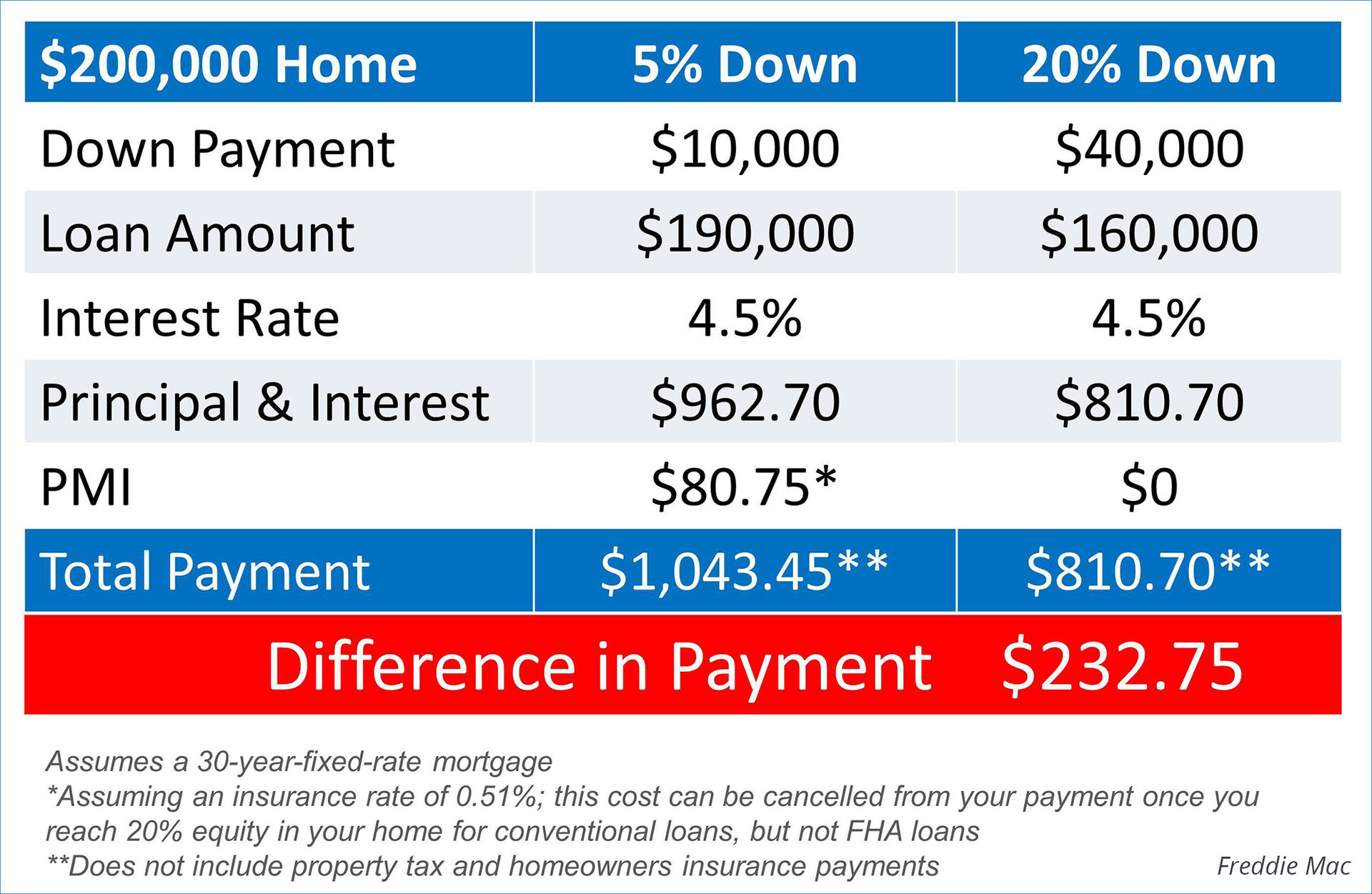
Some experts are advising that first time and move-up buyers wait until they save up 20% before they move forward with their decision to purchase a home. One of the main reasons they suggest waiting is that a buyer must purchase private mortgage insurance if they have less than the 20%. That increases the monthly payment the buyer will be responsible for.
In a recent article, Freddie Mac explained what this would mean for a $200,000 house:
Difference Between a 5% and 20% Down Payment | Keeping Current Matters
However, we must look at other aspects of the purchase to see if it truly makes sense to wait.

Are you actually saving money by waiting?

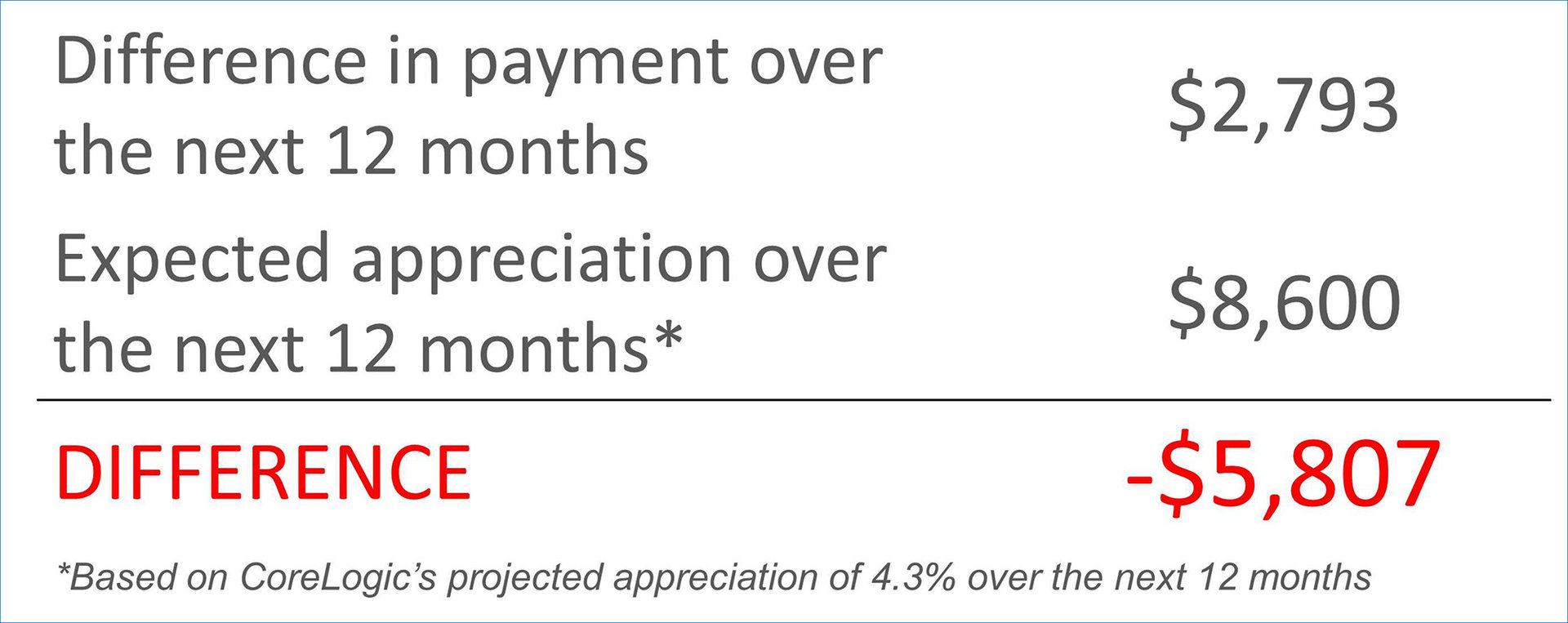
CoreLogic has recently projected that home values will increase by 4.3% over the next 12 months. Let’s compare the extra cost of PMI against the projected appreciation:
PMI vs Appreciation | Keeping Current Matters
If you decide to wait until you have saved up a 20% down payment, the money you would have saved by avoiding the PMI payment could be surpassed by the additional price you eventually pay for the home. Prices are expected to increase by more than 3% each of the next five years.
Saving will also be more difficult if you are renting, as rents are also projected to increase over the next several years. Zillow Chief Economist Dr. Svenja Gudell explained in a recent report:
"Our research found that unaffordable rents are making it hard for people to save for a down payment ... There are good reasons to rent temporarily – when you move to a new city, for example – but from an affordability perspective, rents are crazy right now. If you can possibly come up with a down payment, then it's a good time to buy a home and start putting your money toward a mortgage."
Laura Kusisto of the Wall Street Journal recently agreed with Dr. Gudell:
“For some renters there may be a way out: Buy a house. Mortgages remain very affordable.”

Mortgage rates are expected to rise…

Freddie Mac is projecting that mortgage interest rates will increase by almost a full percentage point over the next 12 months. That will also impact your mortgage payment if you wait.

Bottom Line

Sit with a real estate or mortgage professional to truly understand whether you should buy now or wait until you save the 20%.

Tuesday, September 22, 2015

The Affordability Squeeze

http://www.car.org/3550/OCTemail/718399/2015/TheAffordabilitySqueeze300dpi.jpg

Freddie: ‘Housing Market Strongest in Years’

Daily Real Estate News | Thursday, August 27, 2015


The housing market is gradually showing signs of stabilizing, as two additional states – Arkansas and Tennessee – as well as four additional metro areas are added to Freddie Mac’s latest Multi-Indicator Market Index reading. The added metros are Omaha, Neb.; Scranton, Pa.; Chattanooga, Tenn.; and Madison, Wis.
Read more: A 10-Year Housing Surge on the Horizon?
The MiMi measures the stability of the nation’s housing market by comparing its long-term stable range to current ratios in home purchase applications, debt-to-income ratios, on-time mortgage payments, and employment.
Since hitting an all-time low in October 2010, the national MiMi has rebounded 35 percent. However, it remains significantly off from its high of 121.7. It’s currently at a value of 80.3, a housing market considered mostly in a stable range.
"Housing markets are the strongest they've been in years with the National MiMi above 80 for the first time since 2008,” says Len Kiefer, Freddie Mac’s deputy chief economist. “Nationally, all MiMi indicators are heading in the right direction. Robust home buyer demand has put total home sales on pace for the best year since 2007 and look for that trend to continue as the MiMi purchase applications indicator remains on the upswing. The West has been especially strong, with many markets posting double-digit growth in their MiMi purchase applications indicator compared to a year ago."
Still, home prices are about 7 percent below peak values nationally, Kiefer notes. However, home prices in many markets are soaring to all-time highs, and that along with low interest rates, are helping to support home buyer affordability, he says.
Also, "mortgage delinquencies are coming down rapidly, but are still high in many markets,” Kiefer says. “Those markets hardest hit by the Great Recession, including many in Florida, are rebounding but they still need to improve to get delinquencies back in line with their benchmark historic averages. The key driver of all this recovery has been solid job growth, with 96 out of 100 metros and all states within range of their benchmark historic average unemployment rate."
Freddie Mac’s latest MiMi reading showed that 28 of the 50 states, as well as the District of Columbia, have values in a stable range. The top five are: Washington, D.C.; North Dakota; Montana; Hawaii; and California and Utah (tied).
What’s more, 42 of the 100 metro areas have MiMi values in a stable range. Ranking in the top five are: Fresno, Calif.; Austin, Texas; Honolulu; Salt Lake City; and Los Angeles.
Source: Freddie Mac

Friday, September 18, 2015

52% Likely to Buy in the Next 5 Years!! Are You?

According to the recently released BMO Harris Bank Home Buying Report, 52% of Americans say they are likely to buy a home in the next five years. Americans surveyed for the report said they would be willing to pay an average of $296,000 for a home and would average a 21% down payment. The report also had other interesting revelations.

Those Looking to Buy

  • 74% of those looking to buy a new home will consult a real estate agent
  • 59% said they will visit online real estate websites
  • 37% will seek recommendations from friends and family
  • 78% plan to get pre-approved before seriously searching for a home

Those Who Already Own

  • 75% of current home owners set a budget before looking for a home. 16% ended up spending less while 13% went over their budget.
  • 63% of American homeowners spent under six months looking for a new home before they made a purchase.
  • 8% bought their home without participating in an active real estate search - or even any plan to buy at all - because a specific property caught their attention.
The last point is very interesting: Of those that purchased a home, 8% bought “without any plan to buy at all”. A property caught their attention and they acted on it.

Why are More People not Planning their Next Move?

Why are people that are considering a move not putting their home search to a plan, and instead, buying only when a property catches their attention? A recent article by Fannie Mae may give us that answer, there is evidence that a large numbers of homeowners are dramatically underestimating the equity they have in their current home. The report explains:
“Homeowners may be underestimating their home equity. In particular, if homeowners believe that large down payments are now required to purchase a home, then widespread, large underestimates of their home equity could be deterring them from applying for mortgages, selling their homes, and buying different homes.”

Bottom Line

Perhaps it is time to sit with a real estate professional to determine the actual equity you have in your house and take a look at the opportunities that currently exist in the real estate market. This may be the perfect time to move-up, move-down or buy that vacation home your family has always wanted.